
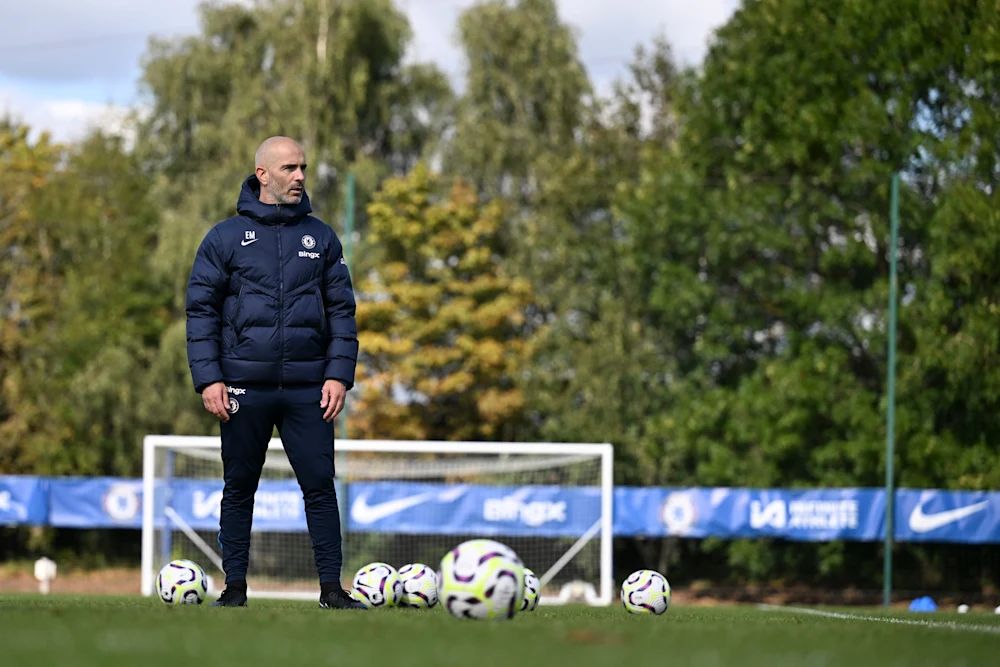
When Enzo Maresca walked into Stamford Bridge on a five-year contract in July 2024 he arrived with a neat résumé that read like the curriculum vitae of modern coaching pedigree: a Manchester City coaching education, a Championship title with Leicester and a reputation for crisp positional play and detail. Eighteen months later, he left with two trophies in the cabinet, a Champions League place under his belt and a reputation for tactical inventiveness; but also the unenviable distinction of becoming the latest manager undone by Chelsea’s post-Abramovich churn.
The ledger: What Maresca delivered (and what it meant)
On the whiteboard, Maresca’s headline achievements are unarguable. In the 2024–25 campaign Chelsea finished fourth in the Premier League (enough to restore Champions League football after a lean period) and clinched the UEFA Conference League with a decisive 4–1 win over Real Betis in Wrocław. That European trophy was quickly followed by a signature summer scalp: a 3–0 victory over rampaging Paris Saint-Germain to lift the expanded FIFA Club World Cup in July 2025. Those facts are not small print: they represent tangible silverware and immediate return on the club’s expectation for results.
But context matters here. Maresca’s silverware largely arrived in cup form and in continental/one-off competitions; high value in prestige, less evidence of the long arc of domestic dominance. The fourth-place finish was progress from the recent limp seasons, yet Chelsea were still a point away from matching the genuine title challengers on consistency. By December 2025 the team had suffered a sharp dip; one win in seven league games; and relations between Maresca and the board reportedly frayed, prompting the club and coach to agree to part company on 1 January 2026.
Style and squad: What Maresca actually changed
Tactically, Maresca brought a City-informed hybrid: high-tempo pressing triggers, quick transitional moments and structured positional rotations in possession. The system unlocked players such as Cole Palmer (an attacker who flourished under Maresca’s brief) and allowed younger or newly recruited assets to operate in clearer, repeatable patterns. His teams could be impressively clinical on the break (the Conference League final and Club World Cup final both underlined that) and showed a capacity to adapt shape mid-game. Analysts lauded the preparation and match-specific plans that produced big results against elite opponents.
Off the pitch Maresca sought more control over load management and footballing decisions than some in the hierarchy were comfortable with. Multiple reports (and the club’s own statement) point to a breakdown in relations between the coach and the ownership/football staff as a major factor in his exit. That, not simply the December run of results, explains why a coach who had brought trophies still left before reaching the midpoint of his contract.
The clean numbers (a quick snapshot)
- Appointment: Announced July 2024.
- Tenure length: Roughly 18 months; departed 1 January 2026.
- Major trophies at Chelsea: 2024–25 UEFA Conference League and 2025 FIFA Club World Cup.
- League return: 4th place in Premier League 2024–25 (Champions League qualification).
How Maresca compares to the recent Chelsea (the last 5 managers)
To judge Maresca fairly you need to read him against the recent, chaotic managerial roll-call at Chelsea under the new ownership. The club’s short memory and high spending have produced rapid appointments and dismissals; with each predecessor leaving a different set of fingerprints.
- Mauricio Pochettino (2023–24): Brought some stabilisation after mid-season turmoil but left after one season without major trophies. He steadied the ship tactically and improved form late in his year but did not leave a legacy of silverware. Maresca’s tangible trophies outstrip Pochettino’s Chelsea return, though Pochettino’s wider CV remains stronger.
- Frank Lampard (interim 2023): A familiar face who could not arrest the slide; his caretaker spell was statistically poor and the team finished with one of its worst points totals that season. Lampard’s tenure cannot be compared on silverware; it was a stopgap that emphasised how poisoned the well had become by constant change.
- Graham Potter (2022–23): Installed as a “project” manager and undermined by chaotic recruitment and an owner-driven impatience; he lasted less than seven months despite a record of attractive football at Brighton. Potter failed to translate his promising ideas into stability at Stamford Bridge. Maresca lasted longer and delivered trophies that Potter did not.
- Thomas Tuchel (2021–22): The high watermark in recent memory: Champions League winner in 2021, plus the UEFA Super Cup, and a clear, pragmatic tactical identity. Tuchel’s immediate return on short notice still ranks above most successors in terms of peak achievement. Maresca cannot match the prestige of a Champions League triumph, but his Conference League and Club World Cup wins are legitimate additions to Chelsea’s trophy list.
- Maurizio Sarri (2018–19): Delivered the Europa League in 2019 and an immediately recognisable playing style (“Sarriball”), yet an uneasy relationship with some players limited his longevity. Sarri’s European trophy shares a resemblance with Maresca’s continental success, but Sarri arrived without the instant domestic turnaround Maresca briefly achieved.
Taken together, Maresca’s record sits somewhere between Tuchel’s elite trophy haul and the lesser returns of the Potter/Lampard era: a coach able to translate clear ideas into hardware, but ultimately unable to thread the political needle at a club that has turned managerial tenure into a revolving door. The fact he left having actually won trophies sets him apart from several immediate predecessors; but his shortfall in sustained domestic dominance leaves questions unanswered.
Legacy: Short and medium term
Maresca’s Chelsea is an awkward, half-finished sentence. On one hand, a manager who wins two trophies, re-qualifies the club for the Champions League and manufactures headline victories over Europe’s biggest names has earned plaudits and buy-in from supporters who were starving for success. On the other hand, the brittle nature of his relationship with the club’s hierarchy and the team’s inability to maintain league momentum turned that success into a short story rather than the opening chapter of an era.
For the player cohort (Cole Palmer, Reece James, Enzo Fernández and others), Maresca offered clarity of role and an identity that produced visible development. For the club’s long-term project, however, his departure reinforces structural questions: recruitment philosophy, decision-making authority and whether Chelsea can ever nurture managerial patience under their current ownership model. Major news outlets have framed his exit as symptomatic of wider governance problems at Stamford Bridge.
Our Final Verdict
Enzo Maresca’s spell at Chelsea reads like the work of a gifted shop-steward in a factory where the foremen cannot agree on what to build. He delivered measurable progress (trophies, Champions League football, tactical identity) and he did so faster than many would have expected. Yet football clubs are political organisms as much as they are sporting ones and Maresca’s failure to reconcile the two was decisive.
History will record him as the coach who added two important trophies to Chelsea’s cabinet and who, for a while, made the team look coherent and dangerous again. But it will also record him as another talented coach who found Stamford Bridge’s internal architecture harder to manage than the opponents on the pitch. That combination (undeniable short-term success with limited institutional buy-in) is the precise reason Chelsea’s managerial list reads like a who’s who of bright ideas that never quite settled in permanently.
And even as Maresca has been pipped as Pep Guardiola’s successor at Manchester City, no one can take away the fact that Enzo has built a strong resume & legacy for himself in footballing circles within such a short while.

